Boards Must Build the Future, Not Control the Past
Many Norwegian boards are stuck in a backward-looking control culture, says Nikolai Fasting of 21st.ai. He argues this outdated approach is lethal for innovation in a rapidly changing world. Read his critique of the inertia in Norwegian boardrooms.
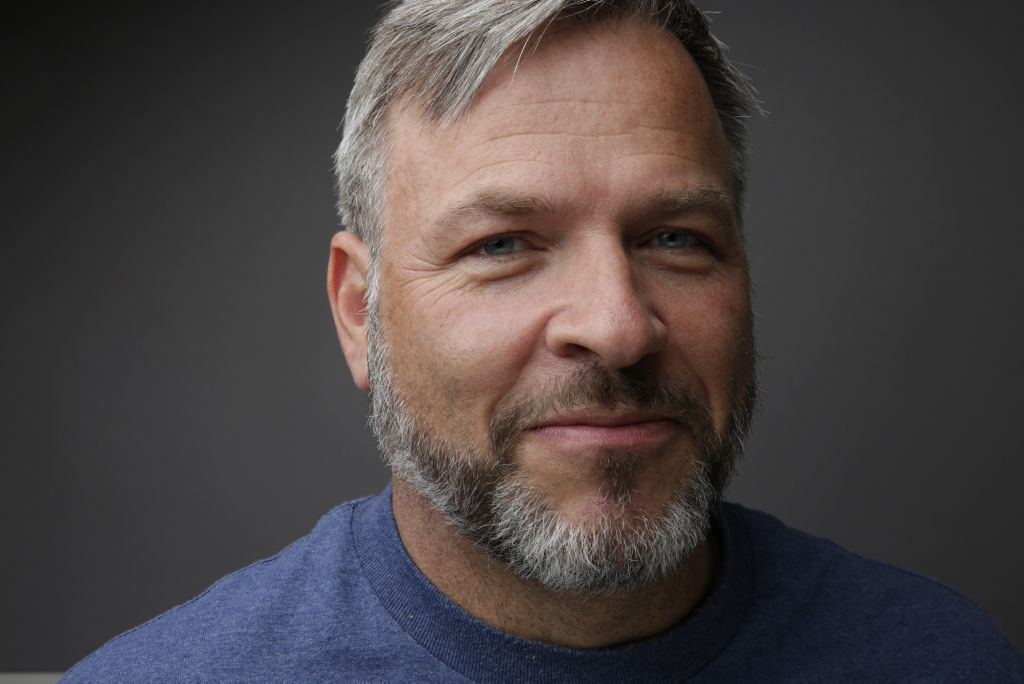
– The board must build the future. Not just control the past
Many Norwegian boards are stuck in a backward-looking control culture, according to Nikolai Fasting of 21st.ai. He points out that society has turned boards into mere accountability bodies. But in a volatile world with increasing competition, this old-fashioned approach is lethal for innovation.
- Most people agree that boards should look forward. Yet, all too often, they don't.
Serial entrepreneur Nikolai Fasting has founded, led, and invested in Norwegian companies for many years. He is now the CEO of 21st.ai, the company developing digital tools for modern board work. He believes Norwegian boards are failing on a crucial point: They are far too preoccupied with the past and too passive in facing the future.
- It's easy to understand why it has become this way in Norway, says Fasting. - In the old days, the world was more stable, and the board's most important task was to ensure responsible operations. It was about following laws, rules, and policies. It still is, to some extent. Ensuring responsible operations is still the cornerstone of board work. But now—in a much more volatile world—the board has an equally important role: They must be a driving force for speed and direction.
Here, Nikolai Fasting quickly jumps into an allegory to elaborate.
- It's the board's job to decide what kind of boat we're building, which harbors we'll dock at, and to chart the course. The management builds and maintains the boat, stands on the bridge, and steers, but the board must approve the direction. It's not enough for the board to passively approve the management's strategy.
- But why are Norwegian boards stuck in the control function?
- A culture of looking backwards has developed. This makes many boards too passive. Instead of being an active sparring partner, they become a rubber-stamping body. The management presents a proposal, the board asks a few questions, and then everyone nods. But that's not enough. You can't just say: “Go create something, and we'll look at it when you're done.” If the company's strategy isn't good, it's the board's responsibility to ensure a better one is developed.
Norway is Stuck in a Commodity Mindset
But wait. There's something else underlying this. In Norway, we've had a unique situation where many companies have had it easy, in the sense that the market was already ready for their products. Yes, we're talking about oil, gas, and other raw materials. So, part of the reason for the sluggishness of Norwegian boards can be explained by Norwegian business history.
- Much of the culture in Norwegian boards is shaped by a commodity logic, says Fasting. - It has been about getting the product out of the ground or up from the sea, and getting it delivered. We knew the market was there. That affects how we have traditionally thought about competition and innovation. Because when you don't have to win the customer, you don't think as much about differentiation.
The consequence is easy to spot: Now that the glory days of the oil industry are more or less over, the image of a country that has fallen behind on the innovation front becomes clearer.
- We have little experience in packaging products and services in a way that wins internationally. If we look at boards and companies in a country like Sweden, they are decades ahead of us in terms of commercial innovation. The commodity logic in Norway has not demanded the same hyper-refinement that, for example, digital services require, because then you have to compete with the rest of the world.
Convenience or Innovation - That is the Question
So where do we start? It's not so simple to develop a commercial mindset overnight. How do we get Norwegian boards to contribute to future value creation, and not just ensure the past is not full of mistakes?
- Boards must be composed differently. They must consist of people who actually have commercial experience. That's not the same as having a salesperson on the board, says Nikolai Fasting.
- What do you mean?
- Being able to close a sale is one thing. Understanding how to build products that actually hit a market is another. It's about a fundamental strategic understanding of the commercial aspect. And that expertise must be represented on the board.
Fasting emphasizes that this isn't about marketing and sales, but about the logic behind how a product or service is shaped from the very beginning. And this is exactly where many boards fail.
- Many leave innovation and product development to the management alone. But in a world of high complexity and competition, the board must be an active part of that process. It's simply about fielding your best team.
And here another human factor enters the picture as a brake.
- When a company selects board members, convenience often prevails. You look around at the people you know and think: I can probably use some of them. But in doing so, you miss out on the strategic hunt for the right expertise and the best people.
Fact Box: 5 Tips for Changing Board Culture
Nikolai Fasting's key steps for elevating the board's strategic work:
- Set direction: The board must actively set the pace and direction and approve a strategy, not just passively approve management's proposal.
- Think commercially: Not just regarding what the company does, but also in the board's composition. Avoid convenience-based selections. Work hard to recruit people with a deep commercial mindset and experience—not just salespeople.
- Get involved in product development: The board must be involved in the company's product and service development. That's where the greatest value is created.
- Use technology: Make the board's necessary control function easier to navigate with the right digital board tools.
- Demand performance: Establish a performance culture in the board. It must be legitimate to challenge each other and speak up if a member is not creating value.
Digital Tools Can Accelerate the Transition
Culture is one thing. But there are also other brakes that are a bit rusted in place. And it's not about strategy or competence, but about something as simple as good old-fashioned housekeeping. Or to put it another way: the semi-digital hell that characterizes much of Norwegian board work—and which often ends up being an obstacle to spending time on important strategy work.
- My brother, Pedro Fasting, was exposed to many existing tools that were supposed to digitize board work, says Nikolai Fasting. - He quickly concluded that many of them were not exactly next generation, to put it mildly. There was too much mess. Too much time was spent on quality assurance.
That's why 21st.ai was created. To serve up all the digital tools needed to conduct modern board work in one place.
- Digital tools, set up correctly, can free up a lot of time. It's a huge opportunity, plain and simple. When quality assurance, control functions, and financial follow-up can be automated and better visualized, the board gets more time for what really matters—helping to chart the course.
But technology is about more than just efficiency.
- You can use AI to find comparable cases, to access insights and data you otherwise wouldn't have found. It can help you uncover competence gaps and improve strategy processes.
But Nikolai Fasting is also clear that not everything can be magically fixed with technology.
- It's important that the tools become a support, not a substitute for human experience. There's no single recipe for how we can succeed with the necessary transformation of board work. But there are signs to look for. First: Does the board have a clear idea of the most important issues for the next six to twelve months? Do they have an annual calendar adapted to their situation—and the journey they are on? If everything, both housekeeping and strategy, is ad hoc, that's a really big red flag.
The Most Common Innovation Mistake on Norwegian Boards
If Nikolai Fasting is asked to point out one major mistake Norwegian boards make in their innovation work, it largely comes down to engagement. It's partly about cleaning up and making control functions as simple and accessible as possible. But it's just as important to find people who are engaged in the company's product and service development.
- It's no use having board members who think about what the company makes and say, “No, that's not why I'm here.” Then the board members become mere passive spectators. That means you're not utilizing their expertise properly. You must have board members who get actively involved, says Fasting.
- Without that, there's little innovation?
- That's absolutely right. And it becomes especially clear if board members try to be proactive without actually having the necessary competence. Then they just create friction. Sand in the machinery. Which, in the worst case, leads the company in the wrong direction.
Here, Nikolai Fasting points to the importance of thinking outside the box when composing the board. Before you fill the seats with people you know, you must map out what kind of competence the company actually lacks. And then go out and look for it.
- Another thing is structure and activity, he says. - Do you have a systematic and deep review of strategic issues? And more importantly: Is there a performance culture on the board?
- How do you mean?
- I mean: Do we expect things from each other? Do we dare to speak up if someone isn't contributing? It must, of course, be done politely, but also honestly. It's okay to make demands. If you don't, you won't have a good board. Here, each board member must also self-reflect. We come back, in many ways, to the aspect of trust in serving on a board, that it is a privilege.
Nikolai Fasting is quiet for two seconds before continuing.
- It's about evaluating yourself: Am I capable of doing the important job that needs to be done in this company?