Boards Have a Moral Duty to Think Big
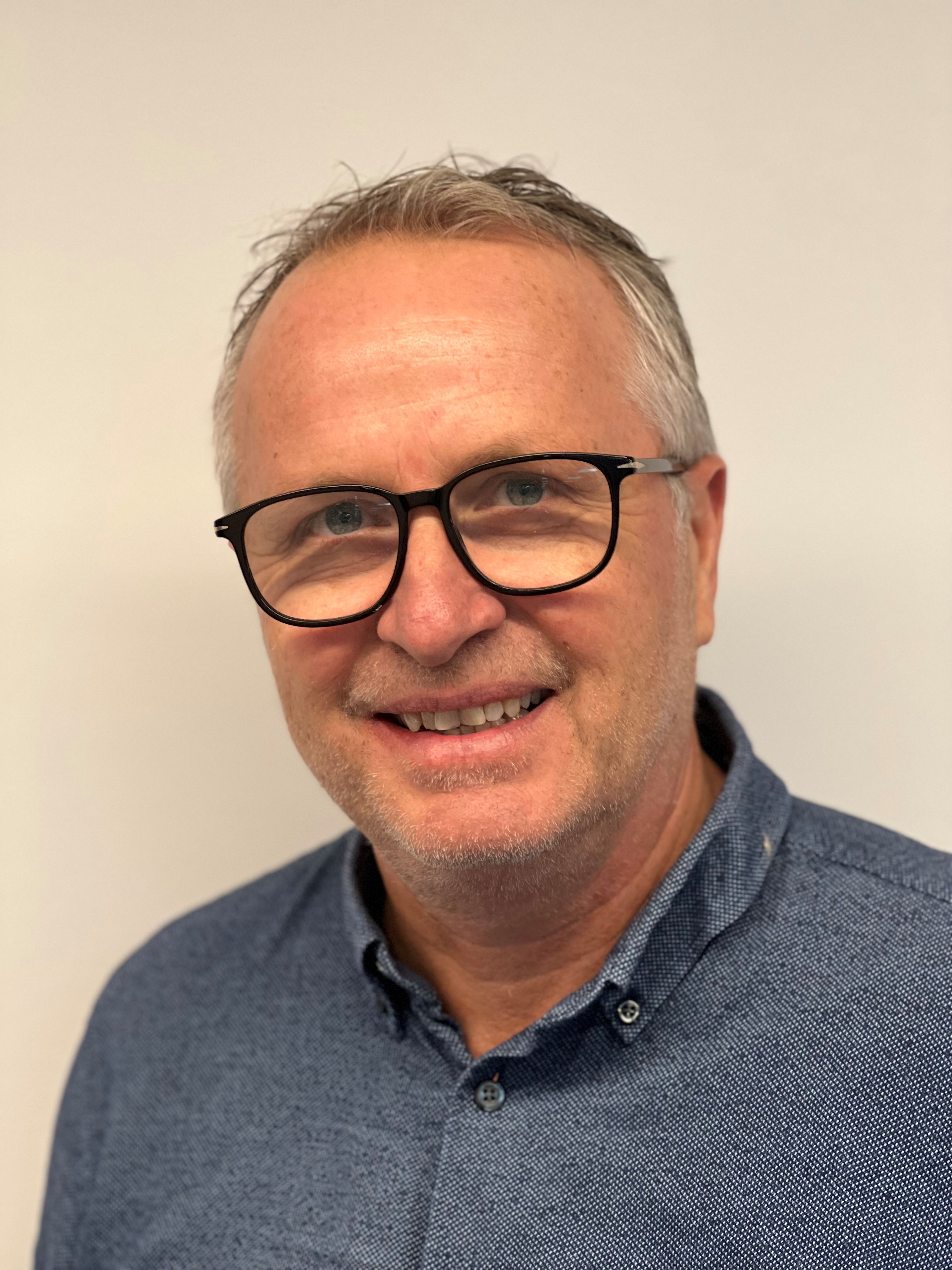
For Trygve Jacobsen, investors come second. He is passionate about supporting ambitious entrepreneurs to succeed by daring to raise their sights, especially if the company dreams of saving the world.
The Handball Court. That's where it all began for Trygve Jacobsen.
Everything he has been involved in throughout a long life in business can be traced back to the life philosophy he laid the groundwork for with a handball in his hand as a boy in Sandefjord. He lived for years with the ambition of becoming Norway's best handball player. Every day for eight years, he woke up with one question in his head: “What is the next thing I need to do to get better?”
At 23, he hung up his handball shoes, but the drive and ambitions have followed him ever since. From financial crisis management in the banking sector in Larvik, to developing the Nordic region's best interior wholesaler, from transforming textile chains and digitizing the staff functions of the auditing giant KPMG.
Common to it all: The ambition to be the best in the world. With an attitude he has taken straight from Pippi Longstocking: I've never done this before, so I'm sure I'll figure it out.
- I say 'world's best' in quotation marks, of course, says Jacobsen, smiling. - But I get bored if I'm not in an environment where that is the focus.
Nevertheless, it was only when he started Try Advisory at the age of 57 that things really fell into place.
- I decided that for the rest of my life, I will use my mind and my heart on people and solutions that both want to and can change the world. And it must happen in a way where I make a significant difference. I am genuinely committed to making a difference. There are boards that only do what they have to. I don't sit on boards like that.
The Board Must Accompany You Through the Valley of Death
Through his advisory company, Try Advisory, Trygve Jacobsen combines the role of chairman and mentor for founders who have created something unique. He is very clear that he is 'founder first'. And that the shareholders come as a result of this. A founder depends on getting the right investors on board. They join because they believe in the founder. It's therefore important that the founder remains strong and in control throughout the journey until the solution is on the market.
- I'm there 24/7. It's necessary. Because founders need someone who can stand with them in the storm. Someone who can answer, not just when things look bright, but also when creditors are knocking at the door. Someone who knows that the company might be 100 meters from success, even if it doesn't look like it.
One such case is Frida Klæbo Vonstad. She has founded a geotechnology company with ambitions to turn both the mining industry and related industries upside down. Jacobsen got in touch with her when she was 29 and had a fresh doctorate in geotechnology. She also had an idea of how the right data and analysis could improve the mining industry and has since developed a technology for mines that allows them to increase the extraction of the minerals they find. Through Frida's technology, they can extract up to 15 percent more, while the waste generated is reduced by a staggering 40 percent.
With the help of Jacobsen's and her own network, she has raised approximately 100 million NOK and today holds shares valued at nearly 300 million NOK.
- The great thing is that she has retained over 80 percent control of her company. Their technology can revolutionize mineral extraction globally, says Jacobsen.
- This is my mission: to help female founders with global solutions. Are you aware that female founders only get access to 2 percent of the available capital? It's a scandal. I have two daughters myself. And I want to be part of creating a better world for them.
Jacobsen believes in the value of the chairman also being a mentor. And with that, he breaks quite substantially with the principle of arm's length distance between the board and daily management. Objectivity and arm's length distance must be built into the process in and around the board. This is achieved through practical transparency, for the board as a whole and other board members.
- Of course, it depends on what phase a company is in, he says. - But especially in founder-led companies, it's good that the chairman and mentor are the same person. It means the chairman has deep insight into the company, into all aspects of the founder's position at all times.
You'll Be Eaten If You Don't Think Globally
For Trygve Jacobsen, there is no doubt: Too many Norwegian boards consider the job done when the administrative work is taken care of. They lack strategic power. He says he has great respect for people who are content when they can live off their company and stash money in their bank account.
- 70 percent of Norwegian businesses are probably in that situation, he says. - But an obstacle in Norwegian business is that we too often have second and third-generation ownership, which clings to what has worked in the past. Many Norwegian companies have an unrealized potential here. If you don't think internationally today, you can be sure that someone else will come from abroad and eat into your market. Many Norwegian companies have international potential that is neither explored nor exploited.
- So, thinking globally is about survival?
- If you have a solution that can change the world, you have a moral responsibility to think big. It's not enough to make a good showing in the Norwegian market. You have to think globally. Only then can you make a difference for many people. And that has to be the ambition.
- This is where you come into the picture?
- Such companies need growth impulses, and for that, they need chairmen who can create a secure process within an ambitious growth plan. They need a chairman with practical experience. Someone who has been there when things were on fire. Governing by the Companies Act alone without practical experience is the same as having already lost. You need trust, the right attitude, and the presence that creates the security owners need to think bigger.
Here he talks about bringing in partners, using his network—and getting external expertise where needed. Because Jacobsen is also painfully aware of the things he doesn't know. For the same reason, he believes that startups should have as small a board as possible.
- In too many Norwegian boards, comfort reigns supreme. You bring in people you know. But then you miss the whole point. A board should be complementary. Board members should challenge, supplement, and elevate each other, says Jacobsen, adding:
- Basically, this is about building up as much business understanding of competitors and the market as possible. What is happening around innovation internationally in our industry? The question is: Are you curious enough about such things, and about the changes that are coming? If you are curious, you usually gain enough insight to fuel that curiosity with competence and knowledge. That's how you become capable of making strategic choices.
- And in that case, the advisory board should be as large as possible?
- It's the best way to acquire unique expertise without hiring people. Because you can't afford that as a startup! It's about connecting with expertise in as many areas as possible. With people who are very keen to help a founder succeed. Let's take Frida as an example.
- Yes?
- The Coring Company has done a preliminary project with NASA, because Frida knew someone there who was enthusiastic about her solutions and ambitions. We also got in touch with a Swedish woman in space technology, a lady we know meets Elon Musk a couple of times a year. She said: Wow, I want to be a part of supporting this. And then we've connected with people like Trond Riiber Knudsen—Norway's most famous angel investor by far—and a Berkeley professor from my network, who is the best in the world at data-driven business models. Having people like that on board has allowed Frida and the team to think like the best in the world.
- That sounds like an incredible collection of expertise?
- Yes. And I believe it's your job as chairman to get these people interested. You don't get people of that caliber if you don't have ambitions to be the best in the world. You must have a clear problem that everyone understands and present the solution to it. Then, great people will want to join in.
Culture Trumps Structure
Integrating strategy as a common thread in board work is another point Trygve Jacobsen emphasizes. Because even though it's important to have all the formalities in order, that's not where the main focus of the board's work should be. He also points to the importance of digital board tools, which can be a great support in making board work run more smoothly. Not least when it comes to keeping everyone up to date.
- Unprepared board members are like handball players who haven't trained before a match. They ruin it for the rest of the team. That's why we must use technology that provides better insight, allows you to prepare flexibly, and secures the flow of information. The board meeting is not the place to ask questions that could have been clarified beforehand. This is challenging to achieve in practice.
- So having a good structure is what you build on?
- At the foundation of good board work lies the structural aspect. Order, overview, good processes, and accessible information, both for the board's own use and for reporting to auditors and others. A digital platform for board work like the one 21st is developing must be expected to have this at its core, says Jacobsen.
- There's a 'but' in that sentence?
- Yes, such a system must also deliver on the board's need to strengthen its focus on strategy, innovation, and growth. I believe this is potentially very exciting, and that it brings interesting perspectives into administration solutions for board work.
Jacobsen points out that technology can also be used to solve tasks differently.
- One can imagine that AI can be used as an information sniffer, to retrieve data. You can also have important board documents read aloud, because people are on the go. It's about adapting to how people work.
He talks about how at Larvikbanken, he created a separate think tank—and held two annual strategy meetings. He talks about how it takes a lot to get people to change their mindset. But that it is possible.
- When I started at the bank, many said it was impossible to change the way they thought. And if you think you can change people's attitudes with a PowerPoint, you're wrong. You have to put people into a process where they gain new knowledge, which they use to acquire new experiences. That's when change happens.
But structure is not the most important thing. Trygve Jacobsen has both experienced this in practice—and worked his way to this conclusion when he wrote his diploma thesis on corporate cultures.
- Structure is important, but without the right culture, nothing happens. People don't dare to challenge each other. They don't speak up when they disagree. And then you don't develop as a board. We must expect something from each other on a board, and it is the chairman's responsibility to create the foundation for that security.
He smiles for a moment here, before continuing.
- It’s all about people, you know.